- Published
- Updated March 31, 2026
- Water Filtration
Whole House UV Filtration Cost: Is UV-Pro Worth the Investment?
Whole house UV filtration cost discover if UV-Pro is worth the investment with pricing, benefits, and long-term value for safer home water.
Clean water is something most UK households assume is guaranteed. Municipal supplies are treated and monitored, yet biological contamination risks still exist. Ageing infrastructure, agricultural runoff, plumbing issues, and private water supplies can all introduce bacteria and microorganisms into household water.
Whole house UV filtration systems are designed to neutralise these biological risks before water reaches your taps. But one of the most common questions homeowners ask is simple: how much does it cost, and is it actually worth the investment?
In this guide, we break down the real cost of whole house UV filtration, ongoing maintenance expenses, and whether UV-Pro delivers value for UK homes.
What is a whole house UV filtration system?
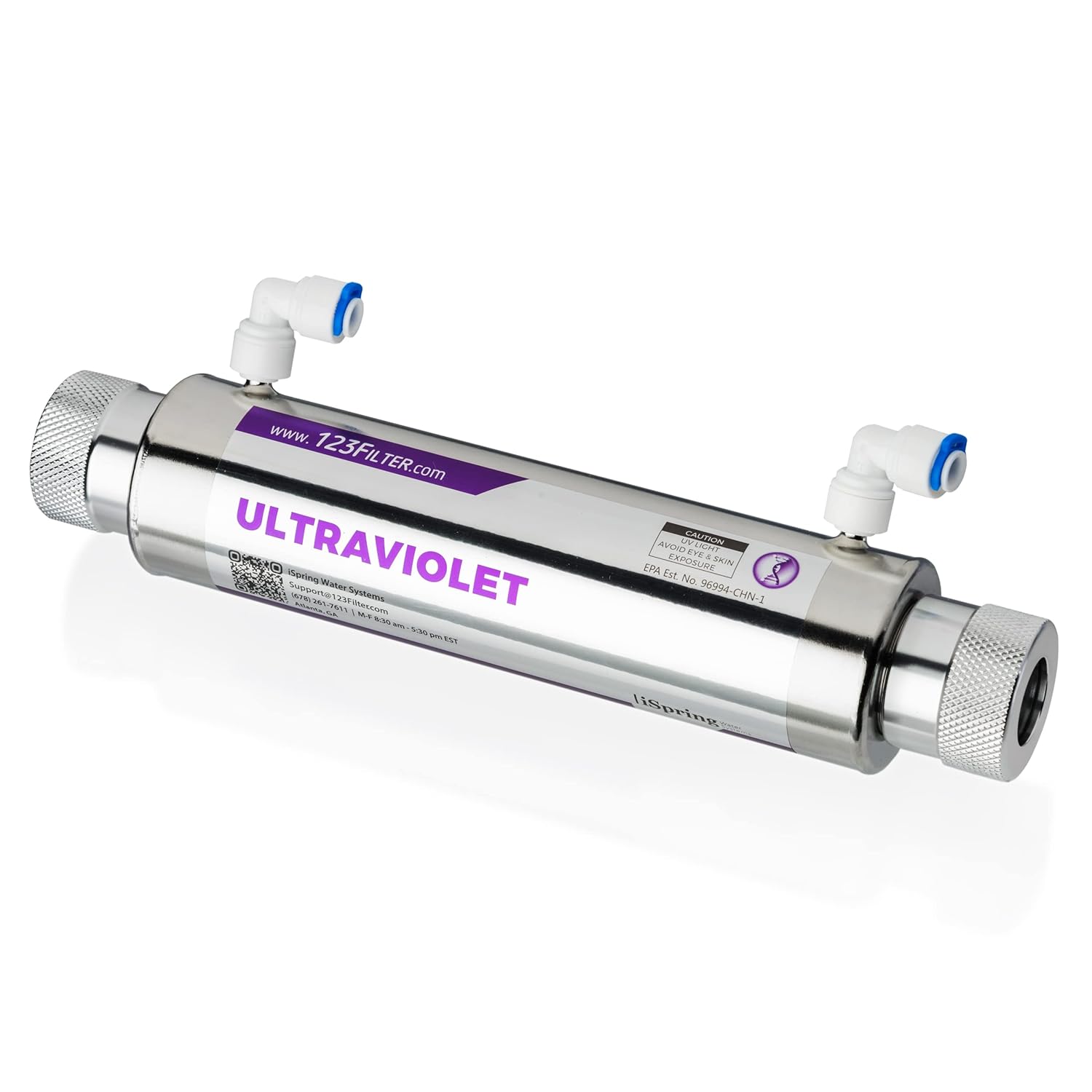
A whole house UV filtration system is installed at the point where mains water enters your property. It uses ultraviolet light to disinfect water by neutralising bacteria, viruses, and other microorganisms.
Unlike carbon filters or softeners, UV systems:
- Do not remove sediment
- Do not reduce chlorine
- Do not change mineral levels
- Do not alter taste
Instead, they target biological contaminants specifically.
Related Article: What Is a Whole House UV Water Filtration System & How Does It Work?
UV systems are often installed as part of a layered water treatment strategy rather than as standalone solutions.
When is UV filtration necessary in the UK?
Not every home requires whole house UV disinfection.
UV is particularly useful for:
- Homes using private wells
- Rural properties
- Homes with suspected biological contamination
- Properties with older plumbing
- Households with vulnerable occupants
In municipal supply areas, UV often serves as an added precaution rather than a primary treatment requirement.
For a broader perspective on hidden water risks, see whole house water filteration.
How much does a whole house UV system cost in the UK?
Initial purchase cost
In the UK, whole house UV systems typically range between:
£500 to £1,500 for the unit alone
Higher-end systems with better flow capacity and monitoring features may cost more.
UV-Pro, as a dedicated whole house UV system, is positioned toward the higher end of the spectrum due to build quality and system performance.
Installation cost
Professional installation typically ranges between:
£300 to £800 depending on:
- Plumbing complexity
- Location of mains entry point
- Additional pre-filtration requirements
- Electrical access
If sediment or carbon pre-filters are not already installed, these may add to total cost.
Total upfront cost estimate
For most UK homes, total installed cost ranges from: £800 to £2,300
This includes:
- UV unit
- Installation
- Basic pre-filtration setup
What is the ongoing running costs for UV system?
Whole house UV systems are not maintenance free.
UV lamp replacement
UV lamps must be replaced annually, even if they still appear to be working. Over time, UV intensity decreases.
Typical annual lamp cost: £80 to £150
Quartz sleeve cleaning
The quartz sleeve that surrounds the lamp can accumulate mineral deposits and requires periodic cleaning.
If your water is hard, cleaning frequency increases.
Pre-filter replacement
Most UV systems require sediment pre-filtration to ensure water clarity.
Annual sediment filter replacement typically costs: £30 to £100
Electricity usage
UV systems operate continuously and consume electricity equivalent to a small light bulb.
Estimated annual electricity cost: £20 to £40
Total annual running cost
On average, whole house UV systems cost:
£130 to £290 per year in maintenance and operation
This cost remains predictable and stable over time.
Comparing UV cost to bottled water reliance
For households concerned about biological contamination, bottled water is often used as a temporary solution.
However:
- Bottled water costs significantly more over time
- Plastic waste accumulates
- Storage space is required
- Environmental impact increases
In most cases, UV systems become more cost effective within a few years compared to bottled water dependency.
UV-Pro vs basic UV systems
Not all UV systems are equal.
Basic UV units may:
- Lack monitoring features
- Have lower flow capacity
- Require more frequent servicing
- Offer minimal safety alerts
UV-Pro systems typically include:
- Higher-grade UV lamps
- Improved chamber design
- Flow rate optimisation
- Reliable build quality
These factors influence long-term reliability and performance stability.
What UV does not do?
When evaluating cost, it is important to understand limitations.
UV does not:
- Remove heavy metals
- Reduce nitrates
- Soften water
- Remove chlorine
- Improve taste
For chemical or dissolved contaminant removal, other systems such as reverse osmosis may be needed.
For a comparison of filtration types, see water filtraion vs water softener.
Is UV-Pro worth it for municipal supply homes?
For urban UK homes using treated mains water, the decision is more nuanced.
Municipal water is chlorinated to reduce biological risks. However:
- Chlorine levels can fluctuate
- Plumbing contamination can occur
- Vulnerable occupants may require added protection
UV-Pro may serve as:
- An additional safety layer
- A chemical-free disinfection method
- A long-term peace-of-mind solution
For many municipal homes, UV is optional rather than essential.
Is UV-Pro essential for private wells?
For homes using private water sources, UV is often strongly recommended.
Private supplies may not have:
- Continuous chemical disinfection
- Centralised monitoring
- Automatic contamination alerts
In these cases, UV becomes a core safety system rather than a luxury.
Environmental impact of UV systems
Compared to bottled water, UV systems:
- Reduce plastic waste
- Eliminate transport emissions
- Operate with low energy usage
While they require electricity and annual lamp replacement, overall environmental footprint remains low.
Cost vs value: long-term perspective
When evaluating UV-Pro, consider:
- Number of occupants
- Source of water
- Vulnerability of household members
- Frequency of biological testing
- Risk tolerance
Over 10 years, total cost including maintenance may range between: £2,000 to £4,000
Spread across a decade, this often equates to less than £1 per day for full-home biological disinfection.
Final Conclusion: Is UV-Pro Worth the Investment?
Whole house UV filtration is not designed to replace filtration, softening, or advanced purification. It serves a specific purpose: chemical-free biological disinfection at the point where water enters your home.
For private well owners, rural properties, and households seeking maximum biological protection, UV-Pro often represents a valuable long-term investment. The predictable annual maintenance cost provides peace of mind that every tap, shower, and appliance receives disinfected water.
For municipal supply homes, the decision depends on personal preference and risk tolerance. While not always essential, UV-Pro can serve as an added layer of safety and reassurance.
Ultimately, UV-Pro is worth the investment when biological risk reduction is a priority. When installed correctly and maintained consistently, it delivers continuous protection with manageable long-term costs.
FAQs: Whole house UV filtration cost
Is UV-Pro expensive compared to carbon filters?
Yes, UV systems cost more because they target biological contaminants rather than taste improvement alone.
How long does a UV system last?
The chamber and housing can last many years with proper maintenance.
Does UV increase water bills?
Electricity cost is minimal and water usage is not affected.
Can UV fail without warning?
Lamp intensity decreases over time, which is why annual replacement is essential.
Is UV worth it for city homes?
It depends on risk tolerance and whether additional biological protection is desired.

About the Author
Nick Smith | Founder | The Water Dr. & Cellthyhomes
Nick has dedicated years to studying building biology, healthy living environments, and the impact of environmental toxins on inflammation.
Whilst regulations for UK drinking water are slow to adapt, & influenced by conflicts of interest, Nick conduct comprehensive research on global regulations & scientific literature to offer water filtration solutions that provide clean drinking water free from all harmful contaminants.