- Nick Water DR
- Published
- Updated January 28, 2026
- Kitchen Station
Kitchen Station vs Other Home Filtration Solutions: Which Is Best for You?
Kitchen Station vs other home filtration solutions compare cost, performance, and convenience to choose the best option for clean water.
Choosing a home water filtration system is no longer just about improving taste. UK homeowners are increasingly thinking about contaminants, appliance protection, skin health, running costs, and long-term value. With so many options available, from under-sink filters to whole-house systems, it can be difficult to know which solution actually fits your needs.
The Kitchen Station has emerged as a popular choice for households that want high-quality drinking water without committing to complex installations. However, it is not the only option. Whole-house filtration, reverse osmosis, and water softeners all solve different problems.
This guide compares the Kitchen Station with other common home filtration solutions, helping you decide which system is best for your lifestyle, water quality concerns, and budget.
What is the Kitchen Station?
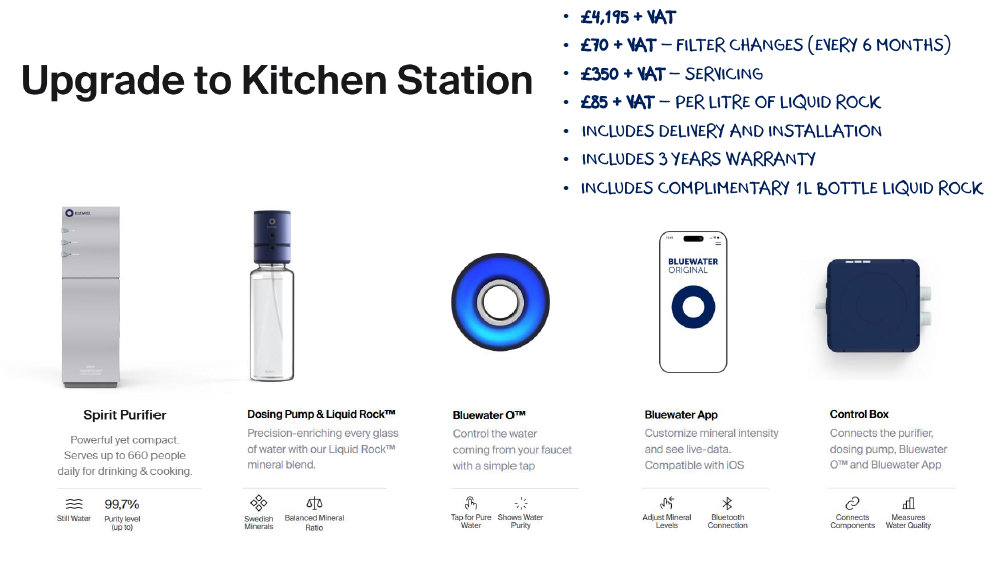
The Kitchen Station is a point-of-use water filtration system designed to deliver high-quality drinking water directly from your kitchen. Unlike whole-house systems, it focuses only on the water you consume rather than treating every litre entering the property.
Key characteristics of the Kitchen Station:
- Installed at the kitchen sink
- Designed for drinking and cooking water
- Compact footprint
- Lower upfront and running costs
- No major plumbing disruption
The Kitchen Station is often chosen by homeowners who want clean, great-tasting water without the complexity of larger systems.
What problems does the Kitchen Station solve best?
The Kitchen Station is particularly effective for:
- Improving taste and odour
- Reducing chlorine and chemical residues
- Enhancing drinking water quality
- Replacing bottled water habits
For households primarily concerned with what they drink, rather than what flows through showers or washing machines, this targeted approach can be highly effective.
It is important to note that the Kitchen Station does not treat all household water. It is a drinking water solution, not a full home water treatment system.
Which is best for your home, water quality, and long-term cost?
Overview of other home filtration solutions
To understand whether the Kitchen Station is right for you, it helps to compare it with the main alternatives available in the UK.
The most common alternatives are:
- Under-sink reverse osmosis systems
- Whole-house water filtration systems
- Whole-house water softeners
- Combined filtration and softening systems
Each option addresses different water quality concerns.
Kitchen Station vs under-sink reverse osmosis
Filtration performance
Reverse osmosis systems remove a broader range of dissolved contaminants than most kitchen-based filters. They are particularly effective at reducing nitrates, fluoride, and dissolved solids.
The Kitchen Station focuses on improving taste and reducing common chemicals rather than stripping water down to very low mineral levels.
If your concern is extreme purity, reverse osmosis may be more appropriate. If your concern is daily drinking quality without over-processing water, the Kitchen Station often feels more balanced.
Speed and convenience
The Kitchen Station typically delivers filtered water on demand. Reverse osmosis systems work slowly and rely on storage tanks that need time to refill.
For households that use a lot of drinking water throughout the day, the Kitchen Station offers a more convenient experience.
Cost comparison
Typical UK costs:
- Kitchen Station: lower upfront cost, predictable filter changes
- Reverse osmosis: higher upfront cost, higher running costs due to filter replacements and water waste
Reverse osmosis systems also waste water during filtration, which can increase water bills over time.
For a deeper cost breakdown, see The true running cost of reverse osmosis within your content cluster.
Kitchen Station vs whole-house water filtration
Scope of treatment
Whole-house filtration systems treat all water entering the home. This includes water used for:
- Bathing and showering
- Laundry and dishwashers
- Appliances and boilers
The Kitchen Station treats only drinking and cooking water.
If your main concern is skin irritation, chlorine exposure during showers, or appliance protection, whole-house filtration offers broader benefits.
You can explore whole-house options on The Water Dr Whole House Filtration page.
Installation and complexity
Whole-house filtration requires:
- Installation at the point of entry
- Space for filtration units
- Higher upfront investment
The Kitchen Station requires minimal installation and fits easily into most kitchens.
For renters or homeowners who want a simple solution without structural changes, the Kitchen Station is often the easier choice.
Long-term value
Whole-house filtration systems:
- Protect plumbing and appliances
- Reduce maintenance and scale buildup
- Improve water quality throughout the home
The Kitchen Station does not offer these benefits, but it also avoids the higher cost and maintenance of full home systems.
Kitchen Station vs water softeners
Water softeners solve a very specific problem: hard water.
They reduce calcium and magnesium to prevent limescale, which:
- Protects boilers and appliances
- Improves soap efficiency
- Reduces cleaning effort
The Kitchen Station does not soften water and does not prevent scale.
If you live in a hard water area, a softener such as Soft Pro or Smooth Tower may be more appropriate for whole-home protection, while the Kitchen Station can still be used for drinking water improvement.
This distinction is explained clearly in water filtration vs water softener: which solution is right for you.
Combining the Kitchen Station with other systems
For many UK homes, the best solution is not choosing one system over another, but combining them strategically.
Common combinations include:
- Whole-house filtration for bathing and appliances plus Kitchen Station for drinking water
- Water softener for scale control plus Kitchen Station for taste and drinking quality
- Kitchen Station as a starting point before upgrading to whole-house filtration later
This layered approach allows homeowners to address immediate concerns first, then expand treatment as needed.
Health and lifestyle considerations
Drinking water quality
The Kitchen Station is designed to improve drinking water without stripping it of all minerals. Many people prefer this balance compared to ultra-purified water from reverse osmosis.
For discussions around mineral balance and drinking water, see safe vs healthy drinking water.
Skin and hair impact
Because the Kitchen Station does not treat shower water, it does not reduce chlorine exposure during bathing. Whole-house filtration is more effective for skin and hair comfort.
Environmental impact
The Kitchen Station:
- Does not waste water
- Requires fewer filter changes
- Reduces reliance on bottled water
Reverse osmosis systems waste water, while whole-house systems consume more resources overall.
For environmentally conscious households, this can be an important deciding factor.
Cost comparison summary
Typical UK cost ranges:
Kitchen Station:
- Lower upfront cost
- Predictable filter replacement
- Minimal running costs
Under-sink reverse osmosis:
- Moderate to high upfront cost
- Higher annual running cost
- Water waste
Whole-house filtration:
- Highest upfront cost
- Moderate running costs
- Long-term appliance protection
Water softeners:
- Moderate upfront cost
- Ongoing salt and maintenance costs
- No drinking water filtration benefit
Who should choose the Kitchen Station?
The Kitchen Station is best for:
- Households focused on drinking water quality
- Homes without major water quality issues
- Renters or short-term homeowners
- People replacing bottled water habits
- Those wanting simplicity and low maintenance
It is not ideal if your primary concern is scale, appliance protection, or shower water quality.
Who should consider other solutions instead?
You may want to look beyond the Kitchen Station if:
- You live in a very hard water area
- You want chlorine reduction for bathing
- You need biological protection such as UV
- You want whole-home water treatment
In these cases, whole-house filtration or softening systems offer better coverage.
Final conclusion: which filtration solution is best for you
The best home filtration system depends on what you are trying to fix. The Kitchen Station excels as a simple, cost-effective way to improve drinking water quality without complexity or high running costs. For many UK households, that alone is enough to make a meaningful difference.
However, the Kitchen Station is not a replacement for whole-home water treatment. If your concerns extend beyond drinking water to include hard water, appliance protection, or bathing comfort, whole-house filtration or softening systems provide broader benefits.
In practical terms, the Kitchen Station is often the smartest starting point. It delivers immediate improvement where water matters most and can be combined with other systems later if your needs change. Choosing the right solution is less about finding the most powerful system and more about matching the system to your actual water quality, lifestyle, and long-term goals.
FAQs: Kitchen Station vs other home filtration solutions
Is the Kitchen Station enough for most UK homes?
For drinking water, yes. For whole-home protection, no.
Does the Kitchen Station remove limescale?
No. It does not soften water or prevent scale.
Is reverse osmosis better than the Kitchen Station?
Only if you need ultra-pure water. For daily drinking, many people prefer the Kitchen Station.
Can I use the Kitchen Station with a water softener?
Yes. This is a very common and effective combination.
Is the Kitchen Station cheaper long term?
Yes. It has lower running costs than reverse osmosis and whole-house systems.

About the Author
Nick Smith | Founder | The Water Dr. & Cellthyhomes
Nick has dedicated years to studying building biology, healthy living environments, and the impact of environmental toxins on inflammation.
Whilst regulations for UK drinking water are slow to adapt, & influenced by conflicts of interest, Nick conduct comprehensive research on global regulations & scientific literature to offer water filtration solutions that provide clean drinking water free from all harmful contaminants.