- Nick Water DR
- Published
- Updated February 14, 2026
- Reverse Osmosis
What is the cost of reverse osmosis? Water waste, power, filter replacements
Reverse osmosis systems are widely promoted as one of the most effective ways to produce clean, great-tasting drinking water at home. In the UK, interest in reverse osmosis has grown steadily as concerns around water contamination, ageing infrastructure, and chemical residues become more visible to the public.
However, while most buyers focus on the upfront price of a reverse osmosis system, very few understand the true running cost once the system is installed. Water waste, filter replacement cycles, pressure requirements, electricity usage, servicing, and system efficiency all influence what you actually pay over time.
This article breaks down the real ongoing cost of reverse osmosis in the UK, explains where hidden expenses come from, and helps homeowners decide whether reverse osmosis is the right solution or whether other filtration options offer better long-term value.
Why reverse osmosis is attracting attention in the UK
Public trust in tap water quality has shifted in recent years. While UK tap water meets regulatory standards, growing awareness of emerging contaminants has led many households to question what those standards really mean in practice.
Topics such as chemical runoff, pharmaceutical residues, industrial pollutants, and persistent compounds are explored in detail in articles like what is causing the contamination of our drinking water in the UK and UK drinking water contamination.
Reverse osmosis appeals because it removes a wide spectrum of contaminants that standard filtration systems may not fully address. At the same time, this level of purification comes at a cost that is rarely explained clearly.
What reverse osmosis actually does
Reverse osmosis is a pressure-driven filtration process. Mains water is forced through a semi-permeable membrane that allows water molecules to pass while rejecting dissolved salts, metals, nitrates, fluoride, microplastics, and other contaminants.
The process produces two outputs:
- Purified drinking water
- Wastewater containing concentrated contaminants
This separation is fundamental to how reverse osmosis works and is the main reason running costs exist.
Many homeowners confuse reverse osmosis with water softening. Softening removes hardness minerals to prevent limescale, while reverse osmosis focuses on drinking water purity. Understanding this distinction is essential, which is why water filtration vs water softener: which solution is right for you is an important starting point before investing in any system.
The single biggest running cost: water waste
Why reverse osmosis wastes water
Reverse osmosis membranes must flush contaminants away from the membrane surface to prevent fouling. This flushing process creates wastewater that is sent directly to the drain.
Unlike simple carbon filters, reverse osmosis cannot function without waste water. Even the most efficient systems still discharge water as part of normal operation.
Typical waste ratios in UK households
Most domestic reverse osmosis systems operate at a ratio of:
- 1 litre of purified water
- 2 to 4 litres of wastewater
Older systems or poorly maintained units can exceed this ratio, particularly in low-pressure homes.
High-efficiency systems with permeate pumps or advanced flow restrictors can reduce waste, but they do not eliminate it.
What water waste means for UK water bills?
In the UK, most households are now on water meters. This means every litre of wasted water increases your bill.
Example scenario:
- Household of four
- 8 to 10 litres of reverse osmosis water consumed daily
- 24 to 40 litres of wastewater produced daily
Over a year, this equates to:
- 8,700 to 14,600 litres of wasted water
At current UK water tariffs, this typically adds £40 to £90 per year to household water bills. In some regions, it can be higher.
Water waste is the most underestimated cost of reverse osmosis ownership.
What are the electricity usage and power consumption?
Reverse osmosis systems vary in how much electricity they consume.
Non-pumped reverse osmosis systems
These systems rely entirely on mains water pressure. They:
- Do not require electricity
- Have no direct power cost
- Perform poorly in low-pressure homes
Pumped reverse osmosis systems
Pumped systems use booster pumps to:
- Increase membrane efficiency
- Reduce water waste
- Improve output speed
Electricity usage is modest. In the UK, pumped systems typically add £5 to £15 per year to electricity bills.
While this is not a major cost, it becomes relevant when combined with water waste and filter replacements over many years.
What is the filter replacement costs over time?
Reverse osmosis systems use multiple filtration stages. Each stage protects the next, and skipping replacements often increases long-term costs.
Typical filtration stages
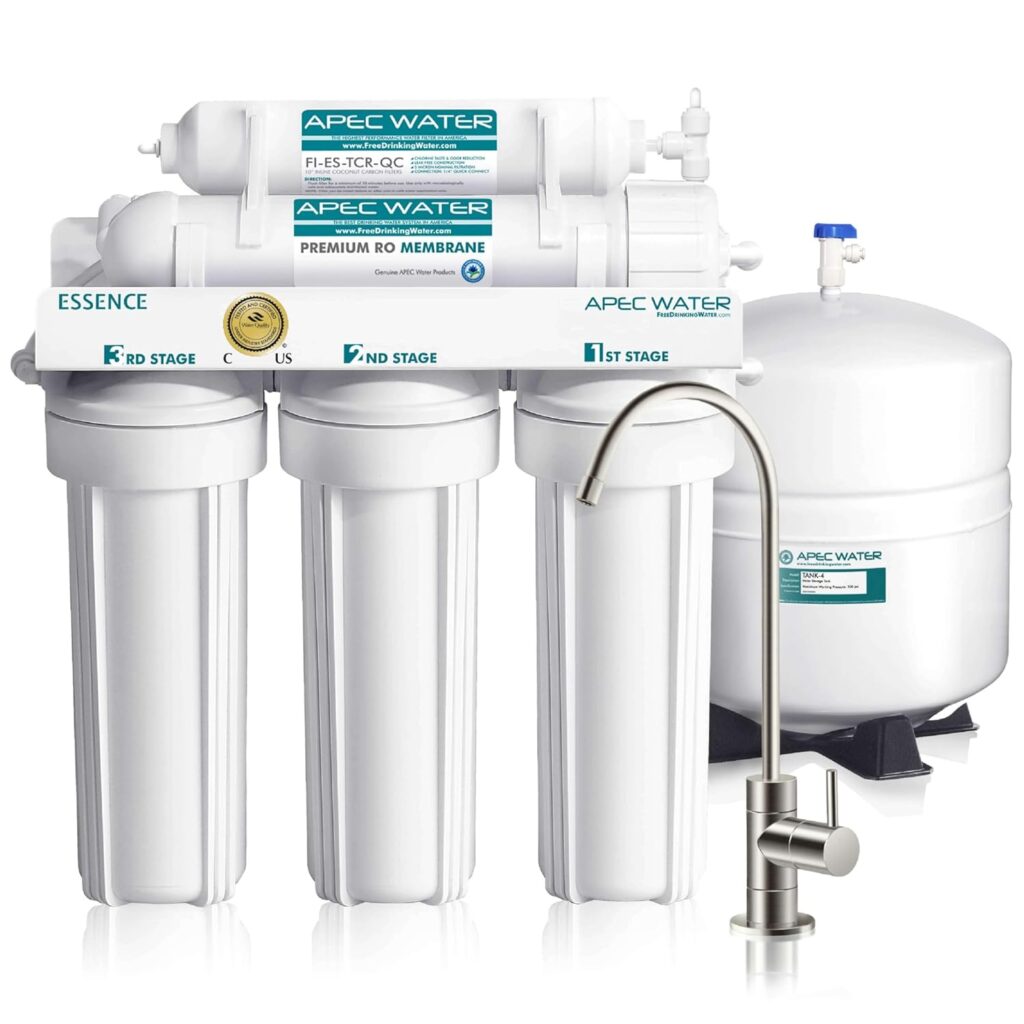
Most UK reverse osmosis systems include:
- Sediment filter
- Carbon pre-filter
- Carbon block filter
- Reverse osmosis membrane
- Post-carbon polishing filter
Each stage has a specific role and replacement schedule.
How often filters need replacing?
- Sediment and carbon filters every 6 to 12 months
- Post-carbon filters annually
- Reverse osmosis membranes every 2 to 5 years
Replacement timing depends on water quality, usage levels, and maintenance habits. For guidance on timing and risks, when to replace water filter cartridges explains why delays often increase costs rather than reduce them.
Typical UK filter replacement costs
- Pre-filters and carbon filters: £30 to £60 per year
- Post-carbon filter: £15 to £30 per year
- Reverse osmosis membrane: £60 to £150 every 2 to 5 years
Annualised filter replacement cost:
£60 to £120 per year
Homes with high chlorine or sediment levels often see shorter membrane lifespans, increasing this figure.
What are the pressure requirements and hidden upgrade costs?
Reverse osmosis membranes require sufficient water pressure to function efficiently.
Common pressure issues in UK homes
Many UK properties experience:
- Low or inconsistent pressure
- Reduced flow in flats and upper floors
- Pressure drops during peak usage
Low pressure causes:
- Slower water production
- Higher water waste
- Shorter membrane life
To correct this, homeowners often need:
- Booster pumps
- Permeate pumps
- Larger pressure tanks
These upgrades can add £150 to £400 upfront, plus small ongoing electricity costs.
Pressure-related inefficiency is one of the most common reasons running costs exceed expectations.
What are the servicing and professional maintenance costs?
While some homeowners handle maintenance themselves, others prefer professional servicing for reliability and warranty protection.
Professional servicing typically includes:
- Filter replacement
- Membrane inspection
- Pressure testing
- Leak detection
- System sanitisation
In the UK, servicing usually costs:
£80 to £150 per visit, typically once per year
DIY maintenance reduces costs but increases the risk of installation errors or leaks if done incorrectly.
What are the total realistic annual running cost in the UK?
When all factors are considered, a typical annual cost looks like this:
- Water waste: £40 to £90
- Electricity: £0 to £15
- Filter replacements: £60 to £120
- Servicing: £0 to £150
Typical annual running cost:
£100 to £300 per year
This figure excludes initial purchase and installation costs.
Reverse osmosis compared to other filtration options
Reverse osmosis delivers extremely pure drinking water, but it only treats one tap.
Whole-house filtration systems:
- Treat all incoming water
- Have lower water waste
- Lower long-term running costs
- Protect plumbing and appliances
For cost comparison, whole-house water filter costs provides a detailed breakdown.
Health, taste, and mineral considerations
Reverse osmosis removes both contaminants and beneficial minerals. This produces very low total dissolved solids water.
Some people prefer the clean taste. Others find it flat or bland.
Discussions around mineral content and perceived health effects are explored in safe vs healthy drinking water and the truth about tap water.
Many systems reintroduce minerals post-filtration to improve taste and balance.
Environmental impact of reverse osmosis
Water waste is not only a cost issue but also an environmental concern.
Reverse osmosis systems:
- Increase household water consumption
- Add pressure to local water supplies
- Conflict with conservation goals in some regions
Broader environmental concerns around water treatment and chemical pollution are discussed in forever pollution and chemical threats in Britain’s water and hungry water and the universal solvent.
When reverse osmosis running costs are justified?
Reverse osmosis often makes sense when:
- Specific contaminants are present
- Nitrates or dissolved solids exceed acceptable levels
- Bottled water spending exceeds £15 to £25 per week
- Taste or odour issues persist despite filtration
For bottled water users, reverse osmosis frequently reduces long-term spending despite higher running costs.
When reverse osmosis may not be the best value?
Reverse osmosis may not be ideal if:
- Water issues are limited to chlorine taste
- Water pressure is consistently low
- Water conservation is a priority
- Whole-house filtration offers broader protection
In these cases, why whole-house water filtration matters explains why alternatives may offer better overall value.
Practical checklist to control reverse osmosis running costs
Before installation
- Test water quality to confirm need
- Measure household water pressure
- Compare filter availability and cost
- Understand wastewater ratios
After installation
- Track filter replacement dates
- Monitor water usage
- Inspect for leaks regularly
Long-term ownership
- Budget for membrane replacement
- Review efficiency every few years
- Reassess whether reverse osmosis remains the best option
FAQs:
What is the cost of reverse osmosis?
The cost of reverse osmosis depends on system size and use, typically ranging from a few hundred dollars for home units to several thousand for commercial or industrial systems.
Is reverse osmosis expensive to run?
Reverse osmosis is not very expensive to run, as operating costs mainly include electricity, water usage, and periodic filter replacements, which are generally affordable for homes and businesses.
What is the operating cost of reverse osmosis plant?
The operating cost of a reverse osmosis plant includes power consumption, membrane replacement, chemicals, labor, and maintenance, usually calculated per cubic meter of treated water produced.
How much water does a reverse osmosis system waste in real UK usage?
Most UK household RO systems waste between two and four litres of water for every litre of purified water produced. This ratio worsens if water pressure is low, filters are overdue for replacement, or the membrane is ageing. Efficient systems with permeate pumps reduce waste but still discharge water as part of normal operation.
Does reverse osmosis significantly increase water bills in the UK?
Yes. In a metered household, most users see an increase of £40 to £90 per year. Homes with higher RO usage, larger families, or inefficient systems may see higher increases.
Are electricity costs something to worry about?
Electricity costs are minor compared to water waste and filters. Even pumped systems usually add less than £15 per year to electricity bills. However, electricity use becomes more relevant over long ownership periods.
How often do RO filters need replacing and why does it matter?
Pre-filters typically require replacement every 6 to 12 months. RO membranes last between 2 and 5 years. Delaying replacements reduces water quality, increases waste, and shortens membrane lifespan, leading to higher costs long term.
Can running costs be reduced after installation?
Yes. Maintaining correct pressure, replacing filters on time, and addressing leaks quickly all reduce water waste and extend component life. Upgrading to permeate pumps also improves efficiency.
Is reverse osmosis cheaper than bottled water in the UK?
For households regularly buying bottled water, RO systems are usually cheaper over time. A household spending £20 per week on bottled water spends over £1,000 per year, far exceeding typical RO running costs.
Does reverse osmosis remove beneficial minerals and should that be a concern?
RO removes most dissolved minerals. Some users prefer remineralisation filters to improve taste. Discussions around mineral balance are covered in safe vs healthy drinking water.
Is reverse osmosis environmentally unfriendly?
RO systems are more resource-intensive than other filtration methods due to water waste. For environmentally conscious households, alternatives such as whole-house filtration may be more appropriate.
How long does a reverse osmosis system typically last?
With proper maintenance, most RO systems last 10 to 15 years. Neglected systems often fail earlier due to membrane damage, leaks, or pressure issues.

About the Author
Nick Smith | Founder | The Water Dr. & Cellthyhomes
Nick has dedicated years to studying building biology, healthy living environments, and the impact of environmental toxins on inflammation.
Whilst regulations for UK drinking water are slow to adapt, & influenced by conflicts of interest, Nick conduct comprehensive research on global regulations & scientific literature to offer water filtration solutions that provide clean drinking water free from all harmful contaminants.