Kitchen water purification systems have evolved rapidly in recent years. While traditional reverse osmosis systems have long been considered the gold standard for high-level purification, newer systems like Purity-Pro are redefining expectations.
Many homeowners now face a practical question: should they choose a standard reverse osmosis system, or does Purity-Pro offer something more advanced?
This detailed comparison explains how both systems work, where they overlap, where they differ, and which option may be better suited for UK households.
What is a standard reverse osmosis system?
A standard reverse osmosis system is a multi-stage water purification setup that uses a semi-permeable membrane to remove dissolved contaminants from water.
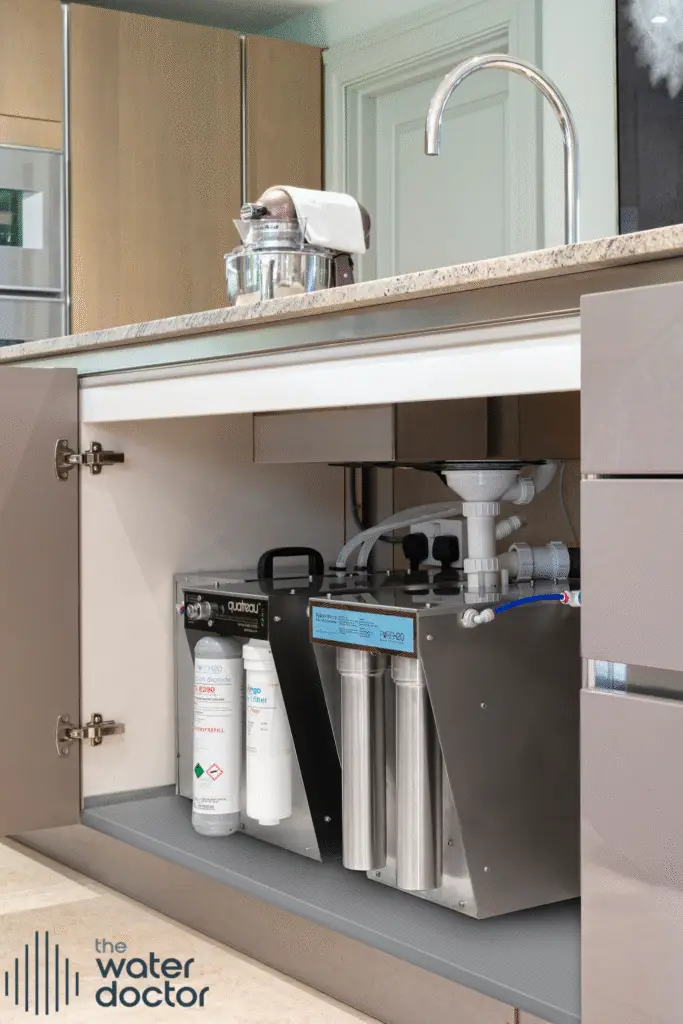
Typical under-sink reverse osmosis systems include:
- Sediment pre-filter
- Activated carbon filter
- Reverse osmosis membrane
- Post-carbon polishing filter
- Storage tank for purified water
Reverse osmosis works by forcing water through a fine membrane that blocks many dissolved solids, including heavy metals, nitrates, salts, and other contaminants.
Standard reverse osmosis systems are widely used in UK homes that want advanced purification beyond simple filtration.
What is Purity-Pro?
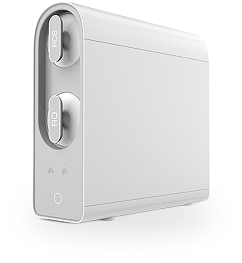
Purity-Pro is an advanced kitchen water purification system designed to go beyond basic filtration and match or exceed the performance of many traditional reverse osmosis setups.
Like reverse osmosis systems, Purity-Pro uses multi-stage purification that includes membrane technology. However, it is engineered as a more refined, performance-focused solution with enhanced consistency and integrated design.
Purity-Pro is designed for:
- Higher contaminant reduction
- Consistent output quality
- Streamlined kitchen installation
- Households seeking stronger purification without compromise
If you want a deeper explanation of its positioning, see
What Makes Purity-Pro One of the Most Powerful Kitchen Water Purification Systems?
What is the core technology comparison?
Pre-filtration stages
Both Purity-Pro and standard reverse osmosis systems include sediment and carbon pre-filtration.
These stages remove:
- Sediment and particulates
- Chlorine and chloramine
- Organic compounds
This protects the membrane and improves overall taste.
At this stage, performance is broadly similar between the two systems.
Membrane purification performance
The membrane stage is where purification power is determined.
Standard reverse osmosis membranes typically remove:
- Heavy metals
- Dissolved salts
- Nitrates
- Fluoride
- Microplastics
Purity-Pro also uses advanced membrane purification but is engineered for enhanced efficiency and performance stability. Its design focuses on delivering more consistent output even when incoming water conditions fluctuate.
This matters in UK regions where water quality can vary seasonally or due to infrastructure changes.
Water quality consistency
One of the key differences is performance consistency.
Standard reverse osmosis systems perform well, but their output quality can be influenced by:
- Incoming pressure
- Membrane condition
- Water temperature
- Feed water quality
Purity-Pro systems are designed with optimised flow and staged purification that aim to deliver more stable output across varying conditions.
For homes prioritising consistency rather than just baseline removal rates, this can be an important distinction.
What are the installation and design comparison Purity-Pro and tandard reverse osmosis?
Standard reverse osmosis systems
Traditional systems:
- Require under-sink installation
- Include a separate storage tank
- Use a dedicated drinking water tap
- May require significant space
Installation complexity varies depending on kitchen layout.
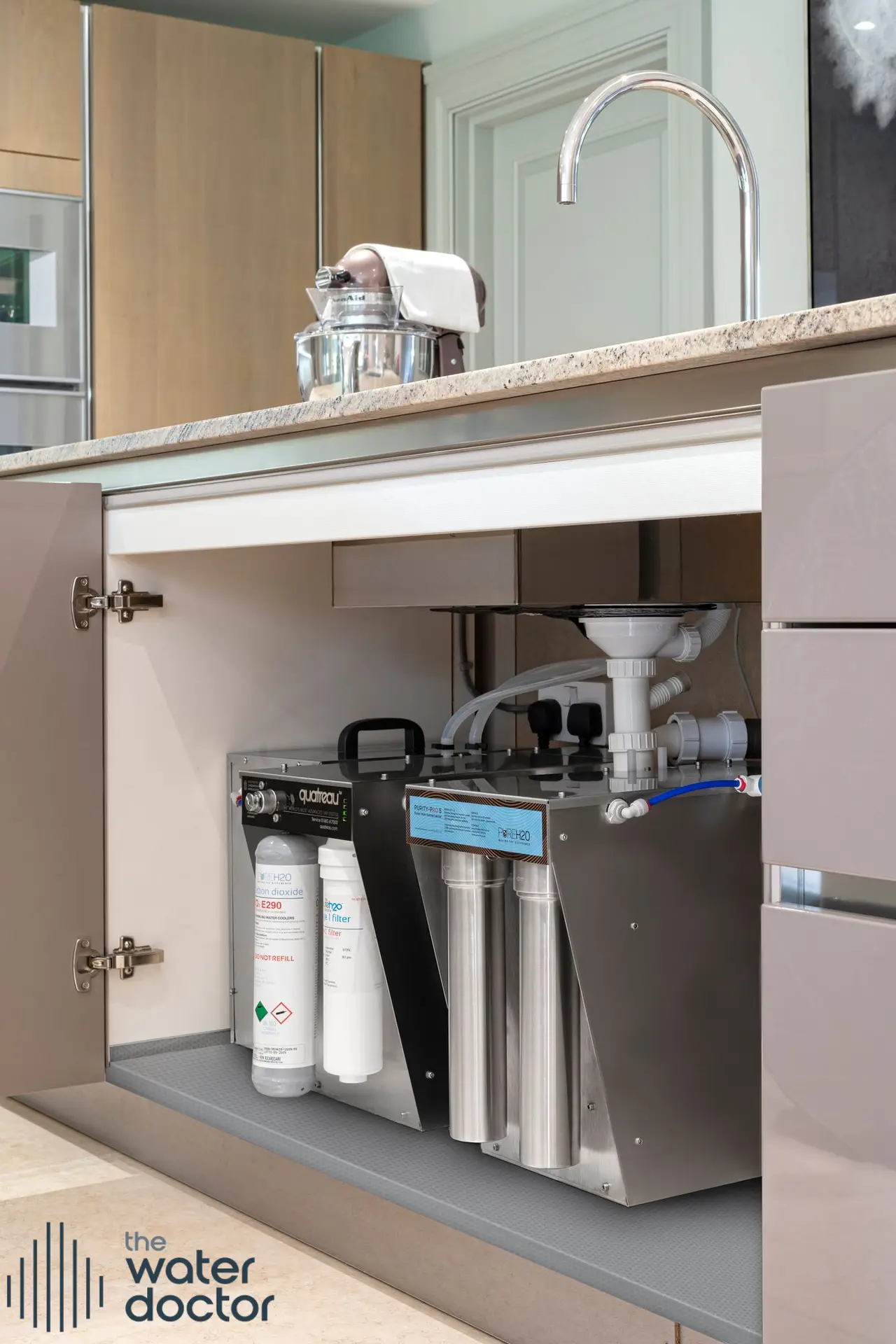
Purity-Pro system design
Purity-Pro is designed with streamlined integration in mind.
While it still requires under-sink installation and drainage, it focuses on:
- Cleaner layout
- Optimised space usage
- Reduced installation complexity
- Structured maintenance access
For modern kitchens with limited under-sink space, design optimisation can be an advantage.
Water waste and efficiency
Reverse osmosis systems produce wastewater during purification.
Standard systems typically:
- Discharge reject water during membrane filtration
- Waste several litres for every litre purified
For a deeper breakdown of running costs and water waste.
Purity-Pro aims to optimise efficiency while maintaining high purification performance. While wastewater still exists as part of membrane technology, system design can influence efficiency ratios.
When comparing systems, wastewater ratio and recovery rate are important factors.
Taste and mineral balance
Both Purity-Pro and standard reverse osmosis systems remove most dissolved minerals.
This produces:
- Neutral taste
- Clean flavour profile
- Reduced metallic notes
However, some traditional RO systems can produce water that feels overly flat if no post-treatment stage is included.
Purity-Pro systems are typically engineered with post-treatment polishing stages designed to ensure consistent taste quality after purification.
For discussion around mineral balance and drinking water quality.
What are the Maintenance requirements for Purity-Pro & standard reverse osmosis?
Standard reverse osmosis maintenance
Typical maintenance includes:
- Pre-filter changes every 6 to 12 months
- Membrane replacement every 2 to 5 years
- Tank sanitisation
- Monitoring flow and pressure
Maintenance schedules vary depending on water quality and usage.
Purity-Pro maintenance
Purity-Pro systems also require:
- Scheduled filter replacements
- Periodic membrane changes
- Routine system checks
However, system design may simplify maintenance access and monitoring.
When evaluating systems, consider:
- Ease of filter replacement
- Access space under sink
- Availability of servicing support
Cost comparison
Initial cost
Standard reverse osmosis systems range widely in price depending on brand and complexity.
Purity-Pro is positioned as a premium purification solution, typically reflecting advanced engineering and performance.
Long-term cost
Both systems involve:
- Filter replacement costs
- Membrane replacement costs
- Water usage costs
Over time, the main savings for both systems come from eliminating bottled water purchases.
If you are currently buying bottled water regularly, either system may deliver long-term cost efficiency.
Purity-Pro vs standard RO for different household needs
Choose standard reverse osmosis if:
- You want proven, established membrane purification
- Budget is a primary factor
- Space constraints are manageable
- You are comfortable managing maintenance
Consider Purity-Pro if:
- You want higher consistency in output quality
- You prefer a more integrated system design
- You want premium performance stability
- Long-term reliability and refinement matter more than upfront cost
Environmental considerations
Both systems:
- Reduce plastic bottle use
- Lower transport emissions
- Eliminate bottled water storage
Both systems also:
- Produce wastewater
- Require replacement components
From a sustainability standpoint, both are superior to bottled water dependency.
What are the common misconceptions?
Purity-Pro is just rebranded reverse osmosis
No. While both use membrane technology, system engineering and performance consistency can vary significantly.
Standard RO is outdated
Not necessarily. Many standard RO systems perform well and remain highly effective.
More purification always means better health
Purification improves contaminant removal, but system suitability depends on household needs and local water conditions.
Final conclusion: which system should you choose?
Purity-Pro and standard reverse osmosis systems both deliver advanced purification far beyond simple carbon filtration. Both remove dissolved contaminants, improve taste consistency, and reduce reliance on bottled water.
The key differences lie in engineering refinement, performance consistency, and overall system integration.
If your priority is established membrane purification at a competitive cost, a standard reverse osmosis system may meet your needs effectively.
If your priority is premium performance, enhanced consistency, and a refined kitchen solution designed for modern households, Purity-Pro offers a more advanced alternative.
Ultimately, the best choice depends on your local water conditions, kitchen space, budget, and long-term expectations for drinking water quality.
FAQs: Purity-Pro vs standard reverse osmosis
Is Purity-Pro more powerful than standard RO?
It is designed to match or exceed typical RO performance while improving consistency and integration.
Do both systems remove heavy metals?
Yes. Membrane-based purification removes dissolved heavy metals.
Do both systems waste water?
Yes. All membrane systems produce some wastewater.
Which system lasts longer?
Longevity depends on maintenance, water quality, and usage rather than brand alone.
Is Purity-Pro worth the higher cost?
For households prioritising premium performance and stability, it may be.