Is bottled water wholesome ?
Over the past two decades, bottled water has quietly become one of the UK’s fastest-growing beverage categories with several billion individual bottles now sold annually . Once considered a niche or luxury product, it is now a staple in offices, gyms, cafes, and homes across the country. This surge isn’t just a trend — it reflects a combination of shifting consumer habits, health-conscious lifestyles, and perceptions of purity and convenience .. But is it actually worth it ? Concerns over tap water quality are often implicitly promoted by the bottled water industry . Would the bottled water sold on the shelves even pass the wholesomeness test required for tap water ? Below we take a closer look at the different types of bottled water categories sold in UK and testing for contaminant gaps that exist when compared to tap water .
The below are the categories of water that are produced in the UK , if you buy a bottled natural mineral water or spring water in the UK it must meet the UK’s chemical and microbial limits to qualify .
The UK authorities run the recognition and enforcement the system requires periodic oversight and gives local authorities responsibility to monitor bottled-water springs regularly. But because monitoring frequency after recognition is not fixed, and there is no publicly available comprehensive enforcement/monitoring record, we cannot know reliably how often — in practice — every spring or bottled-water producer is tested. The oversight works, but it’s decentralised and variable and can see divergence from the EU and global producers .

1) Natural mineral water is almost 60 % of the market and also the most tightly defined and perhaps the best known of the bottled water categories. To qualify, the water must come from a pristine protected underground source and must demonstrate a naturally stable mineral composition over time “stable” in this context means the producer must repeatedly demonstrate that the concentrations of major minerals such as calcium, magnesium, bicarbonate and others remain consistent from year to year.
This long-term stability is a legal requirement and is unique to natural mineral water because it is supposed to reflect a natural and unaltered groundwater source, natural mineral water can undergo only very limited treatment. Producers may remove iron or manganese if necessary, but they are not permitted to disinfect the water or use any aggressive purification technologies.
As a result, the regulation focuses heavily on ensuring microbiological purity directly from the source including E. coli, Enterococci, coliform bacteria and other microbial indicators, and they must meet strict limits for nitrates, nitrites, heavy metals such as lead, arsenic and cadmium, as well as pesticides and polycyclic aromatic hydrocarbons.
The glaring gap here is there is no legal requirement to test for many trace / environmental pollutants . So although the region for the borehole has to qualify as pristine ie naturally protected , testing focuses on mineral composition stability and microbiological safety, rather than contaminant screening for any of the below
Pesticides, herbicides
Pharmaceuticals or endocrine disruptors
PFAS / perfluorinated compounds.
Heavy metals at ultra-trace levels, unless naturally above thresholds.
Micro and nanoplastics – now ubiquitous in our ecosystems
So despite its “premium” perception, natural mineral water is not required to be routinely tested for many modern contaminants By contrast, UK tap water is now subject to systematic national PFAS monitoring, with reporting overseen by the Drinking Water Inspectorate (DWI). Natural mineral water also has no legal requirement to screen for trace industrial pollutants beyond the traditional lists set years ago. In other words, while the category is strongly regulated in terms of classic contaminants, it lags in monitoring emerging chemical risks.
Natural mineral water recognised from the UK … Highland spring , Buxton , Harrogate

2) Spring water sits somewhere between natural mineral water and ordinary bottled drinking water. It must also come from an underground source and must be bottled at that source, but it does not have to demonstrate the same long-term mineral stability. This is why mineral levels can vary more widely between spring waters, even from the same producer.
The regulations for spring water allow more treatment than for natural mineral water, giving producers the ability to adjust clarity or remove naturally occurring components that might affect taste or appearance. However, spring water must still meet the same microbiological safety limits as natural mineral water when it is bottled.
Bacterial indicators and must comply with the same limits on heavy metals, nitrates, nitrites, pesticides and PAHs. In day-to-day safety standards, these requirements place spring water on roughly equal footing with natural mineral water in terms of the traditional contaminant list.
Regulatory blind spots. Same as for above , there is no mandatory testing for PFAS, no routine screening for pharmaceutical pollutants, and no requirement to measure microplastics , pesticides and other endocrine disruptors ….
This is significant when compared with the UK tap-water framework, which subjects public water supplies to regular and transparent monitoring for a wide array of modern contaminants. While spring water is marketed as “natural,” the regulations do not demand any broader chemical screening beyond the longstanding set of conventional contaminants.
Gaps in the framework

So as we can see from the above , the protection from trace chemicals and contamination is not tested by individual limits like it would need to be for drinking water , instead the definition for a pristine geographical location is used to determine that it does not contain these chemicals .
In short: “pristine” is a functional, catchment-specific, hydrology-based classification — not defined by a universal buffer distance.
In practise however persistent dangerous trace contaminants can reach an aquifer even when there are no factories nearby, because these chemicals are extremely mobile and long-lasting. They can enter the environment through wastewater sludge spread on fields, landfill leachate, fire-fighting foams used many kilometres away, atmospheric deposition, or upstream surface-water inputs that eventually recharge the groundwater.
An aquifer’s geology can also determine how easily such substances migrate into the water, but the original pollution source may be far from the spring itself — sometimes tens of kilometres away — making PFAS a concern even in apparently remote or pristine catchments.
3) Bottled drinking water, sometimes called table water. This is the most flexible classification and encompasses everything from supermarket value-brand still water to products made by treating mains water and rebottling it. Unlike natural mineral or spring water, bottled drinking water does not need to come from a specific protected source. It may be treated extensively using filtration, UV light, reverse osmosis or remineralisation, and the resulting water must simply meet general bottled-water chemical and microbiological safety requirements.
These requirements include compliance with limits on bacteria, nitrates, nitrites, metals and pesticides — much like the other categories. However, bottled drinking water is not required to track long-term mineral stability nor to reflect any natural composition. It is therefore the most variable of all three categories.
Importantly, bottled drinking water has the same modern-testing gaps as the other categories. There is no mandatory PFAS screening, no routine pharmaceutical testing and no requirement to monitor microplastics or most emerging industrial contaminants. This is a stark contrast to UK tap water, where the DWI enforces extensive monitoring and public reporting across a much broader range of chemical risks.
Examples of bottled drinking water commonly found in UK shops include supermarket own-brand still waters and products like Nestlé Pure Life, which may be treated, blended or derived from mains water depending on the specific bottling plant
What about the bottles and the impact of leaching ?
When buying bottled water in the UK, the container you choose matters nearly as much as the water inside. Bottled water comes in three main formats: plastic, glass, and cartons, each with distinct characteristics, risks, and popularity.
Heat, sunlight, or long storage times increase leaching risk, especially in plastic bottles. Recent research supports the cause of micro plastic contamination is often from opening and closing the plastic caps .

Plastic Bottles
By far the most common type in the UK, plastic bottles account for roughly 96% of bottled-water sales. Most are made from PET (polyethylene terephthalate). PET is lightweight, shatterproof, and inexpensive, making it ideal for mass distribution.
However, not all plastic bottles are the same. Variations exist between new PET and recycled PET (rPET), and between different manufacturing batches. Research has shown that recycled PET can leach slightly more chemical compounds into water, especially under heat or prolonged storage.
Antimony, a catalyst used in PET production, can migrate into water over time. Studies report higher antimony concentrations when bottles are stored at elevated temperatures. Microplastics and chemical additives such as phthalates have also been detected in bottled water, particularly in single-use PET containers.
Plastic additives: Phthalates, bisphenols, or residual monomers can migrate into water.
Microplastics: Found even in high-end bottled water, particularly in PET and cap liners.
Glass Bottles safest chemically
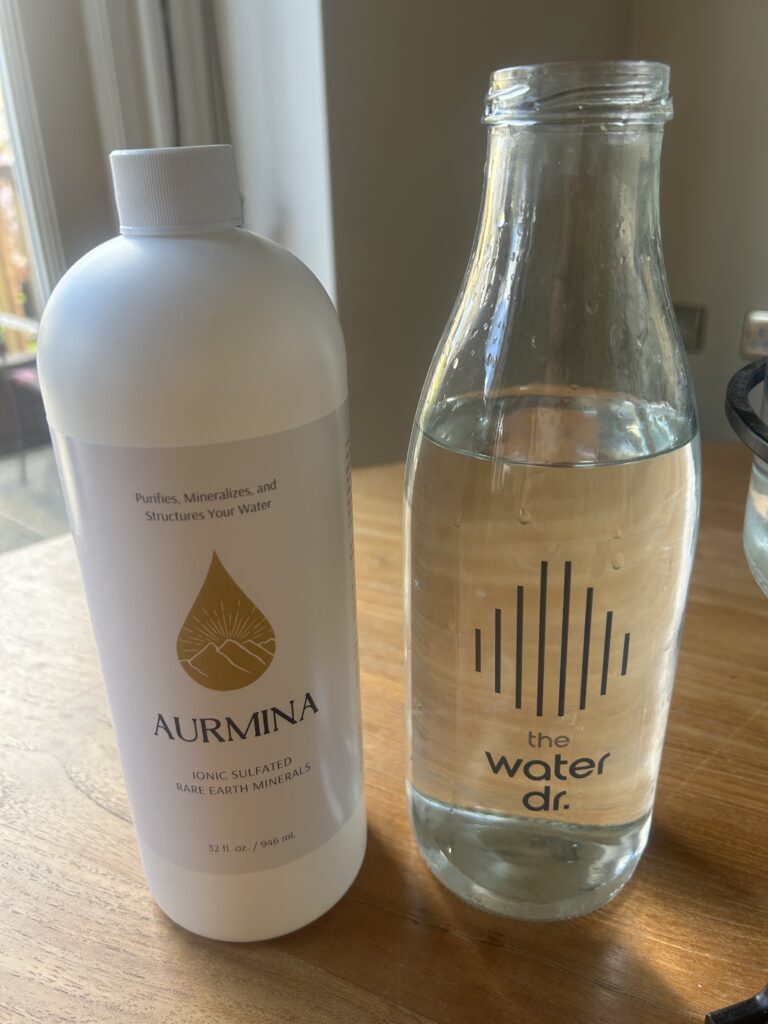
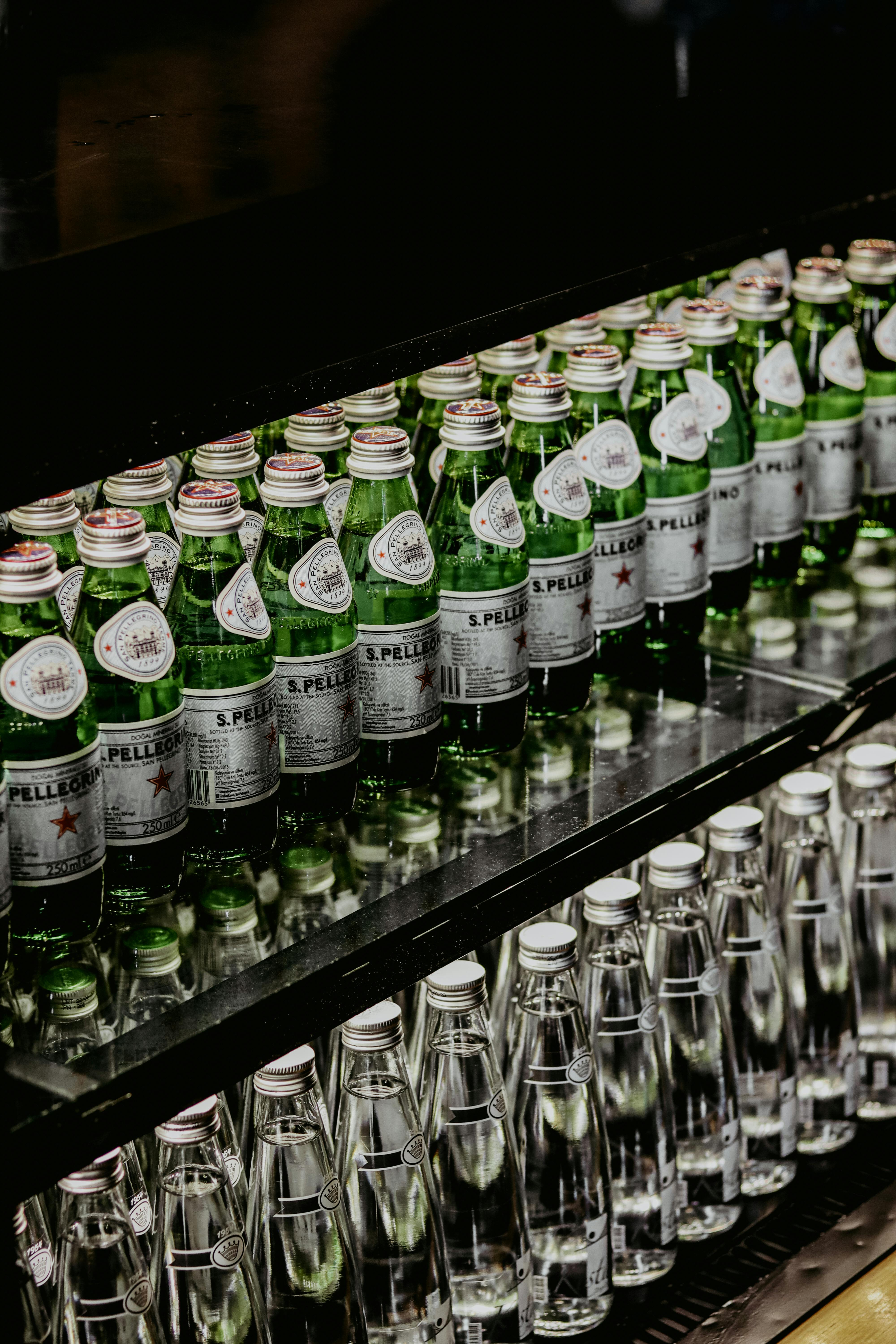
Glass is often marketed as the premium choice. Chemically inert and stable, glass bottles do not leach plasticizers, making them generally safer for long-term storage. However, the caps, often metal with polymer liners, can introduce microplastics or metal residues. While glass reduces chemical exposure compared to PET, it is heavier, more fragile, and less common in UK retail. Glass accounts for only a small fraction of bottled water sales, mainly in high-end or boutique markets.
Cartons and Alternative Packaging
Cartons (paper-based or multi-layer) and bioplastics are emerging alternatives, primarily in eco-conscious segments. They reduce plastic usage, but most rely on internal coatings to make them waterproof, which can contain synthetic polymers. Chemical leaching studies are limited, but liner materials may contribute trace contaminants if the water is stored for long periods or at higher temperatures. Cartons remain a niche segment, representing less than 5% of UK bottled water.
Aluminium cansThese are internally coated with a thin polymer liner — usually epoxy resin or BPA-free alternatives — to prevent the metal reacting with the liquid. Independent studies (including UK-specific analyses from 2023–2025) show that leaching of aluminium into the water is extremely low and almost always below the WHO and EU drinking-water limit of 200 µg/L. However, the polymer lining itself can slowly release microplastics, bisphenol analogues (BPA, BPF, BPS), and trace phthalates, especially if the can is damaged, overheated, or stored for many months. Contamination levels are generally lower than in single-use PET plastic bottles
The lesser of evils …
The creation of bottled water implicitly implies improved quality and this perception of bottled water identifies the problem with tap water . We are unfortunately restricted as humans to measure its purity by smell , sight or taste but this is a very poor measure of its overall health quality and whether the water contains pernicious passengers that are detrimental to our health . The further and closer inspection of both identify by far the best way to guarantee clean pure drinking water is through bespoke filtration and in particular reverse osmosis to safeguard and maximise the quality of your drinking water from the relentless barrage from man made pollution ..
And remember casually buying a large bottle of water everyday could end up costing many hundreds of pounds a year , the upfront expense of a water filtration system is always galling but will pay for itself in the long run and assure purity and unlimited drinking water that you can’t find anywhere else …
Book a here for a free consultation to glean advice on how you can upgrade your drinking water


About the Author
Nick Smith | Founder | The Water Dr. & Cellthyhomes
Nick has dedicated years to studying building biology, healthy living environments, and the impact of environmental toxins on inflammation.
Whilst regulations for UK drinking water are slow to adapt, & influenced by conflicts of interest, Nick conduct comprehensive research on global regulations & scientific literature to offer water filtration solutions that provide clean drinking water free from all harmful contaminants.