- Nick Water DR
- Published
- Updated March 31, 2026
- Reverse Osmosis
What is reverse osmosis?
What is reverse osmosis? Learn how RO systems work, how they purify water, and why they are widely used for safe drinking water.
Reverse osmosis is often presented as the ultimate solution for clean drinking water. In the UK, interest in reverse osmosis has grown steadily as awareness increases around water contamination, chemical residues, ageing pipework, and the limitations of basic filtration systems.
Despite its popularity, reverse osmosis remains one of the most misunderstood water treatment technologies. Many homeowners do not fully understand how it works, how long it takes to produce water, how much it truly costs to own and operate, or whether it is even necessary for their specific water quality issues.
This article explains reverse osmosis in clear, practical terms. It covers what reverse osmosis is, how it works, how long filtration takes, realistic UK costs, and how to choose the best reverse osmosis system without falling for marketing claims.
What is reverse osmosis in simple terms?
Reverse osmosis is a water filtration process that removes dissolved contaminants by forcing water through a semi-permeable membrane. This membrane allows water molecules to pass while rejecting many dissolved solids such as salts, heavy metals, nitrates, fluoride, microplastics, and other chemical compounds.
Unlike standard filters that rely mainly on adsorption, reverse osmosis physically separates contaminants at a molecular level. This is why it can remove substances that carbon filters cannot reliably capture.
The process always produces two outputs:
- Purified drinking water for consumption
- Wastewater that carries rejected contaminants to the drain
This wastewater is not a flaw. It is a fundamental part of how reverse osmosis works.
Why reverse osmosis is becoming popular in the UK?
UK tap water meets regulatory standards, but compliance does not guarantee the absence of contaminants. Standards are based on acceptable limits, not complete removal.
Growing public concern has been driven by:
- Reports of chemical runoff and agricultural nitrates
- Ageing distribution infrastructure
- Pharmaceutical residues
- Microplastics and emerging contaminants
These concerns are explored in detail in what is causing the contamination of our drinking water in the UK and UK drinking water contamination.
Reverse osmosis appeals because it removes a wider range of dissolved contaminants than most household filtration systems. For many homeowners, it offers reassurance rather than just better taste.
Reverse osmosis vs standard water filtration
Reverse osmosis is often confused with general water filtration, but they solve different problems.
Standard filtration systems:
- Improve taste and odour
- Reduce chlorine and some organic compounds
- Do not remove most dissolved solids
Reverse osmosis systems:
- Remove dissolved salts and metals
- Reduce nitrates and fluoride
- Produce very low total dissolved solids water
This distinction is explained clearly in water filtration vs water softener: which solution is right for you, which helps homeowners avoid installing an overly complex system for a simple problem.
How reverse osmosis systems work step by step?
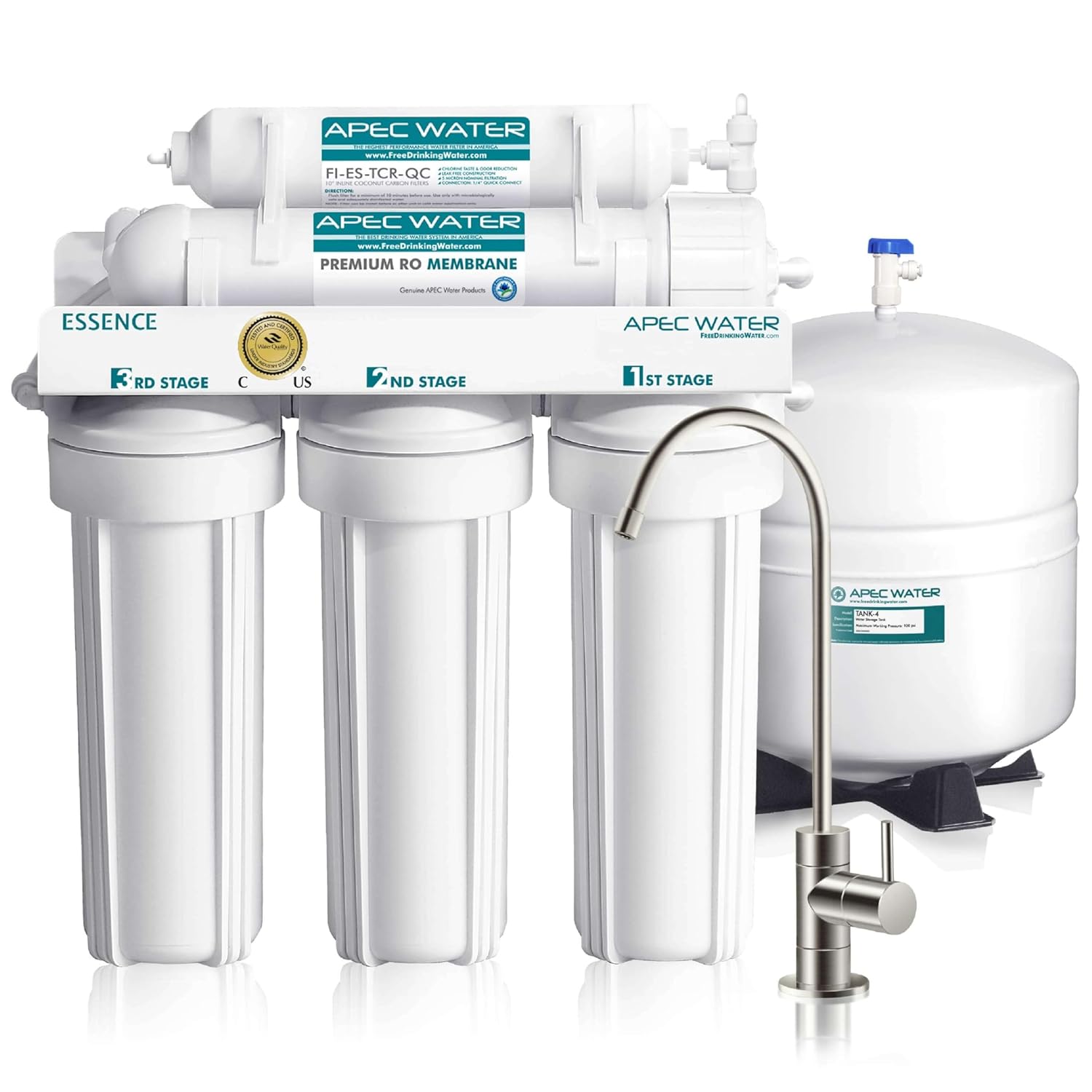
A domestic reverse osmosis system uses multiple filtration stages, each with a specific role.
Stage one: sediment filtration
This stage removes sand, rust, silt, and fine particles. Without this stage, downstream filters clog quickly and membrane lifespan is reduced.
Stage two and three: carbon filtration
Carbon filters reduce chlorine, chloramine, and organic compounds. This step is critical because chlorine damages reverse osmosis membranes.
Stage four: reverse osmosis membrane
This is the heart of the system. The membrane rejects dissolved contaminants and produces purified water slowly under pressure.
Stage five: post-carbon filtration
This final stage improves taste and removes any residual odour before water reaches the tap.
Some systems also include remineralisation filters to add back small amounts of calcium or magnesium for taste balance.
How long does reverse osmosis take to filter water?
Reverse osmosis is not instant. It works slowly and relies on storage rather than real-time flow.
Typical UK system performance:
- 2 to 4 litres of water produced per hour
- Storage tank capacity of 6 to 12 litres
- Refill time of several hours once the tank is empty
This means reverse osmosis is best suited for:
- Drinking water
- Cooking
- Hot drinks
It is not designed for showers, baths, or whole-home supply.
Households with high water consumption may experience delays if the tank is depleted.
Does reverse osmosis waste water
Yes. Water waste is unavoidable with reverse osmosis.
Most domestic systems waste:
- 2 to 4 litres of water for every 1 litre of purified water
High-efficiency systems use permeate pumps and improved membranes to reduce waste, but no reverse osmosis system operates without discharge.
The long-term cost and environmental impact of water waste are covered in depth in The true running cost of reverse osmosis within your content cluster.
Cost of reverse osmosis systems in the UK
Purchase cost
Typical UK prices:
- Entry-level under-sink systems: £250 to £500
- Mid-range systems with better membranes: £500 to £900
- Premium systems with pumps and remineralisation: £900 to £1,500
Lower-priced systems often use lower-grade membranes and proprietary filters that increase long-term costs.
Installation cost
Professional installation usually costs:
- £150 to £400
Costs increase if:
- Water pressure is low
- A booster pump is required
- Cabinet modifications are needed
Annual running cost
Typical UK running costs:
- Filter replacements: £60 to £120
- Water waste: £40 to £90
- Electricity: £0 to £15
- Optional servicing: £80 to £150
Total annual running cost:
£100 to £300
Is reverse osmosis safe for drinking water?
Reverse osmosis produces very pure water. However, it removes both harmful contaminants and beneficial minerals.
This has led to debate around mineral balance and taste. These concerns are explored in:
Many modern UK systems include remineralisation filters to address this concern.
Reverse osmosis vs whole-house filtration
Reverse osmosis treats one tap only.
Whole-house filtration systems:
- Treat all incoming water
- Reduce chlorine throughout the home
- Protect plumbing and appliances
- Have lower water waste
Cost and suitability are explained in:
Many UK homes combine whole-house filtration with reverse osmosis for drinking water.
Top reverse osmosis products in the UK
Rather than focusing on brand names, the best systems share key characteristics.
Best for most UK homes
Mid-range under-sink systems with standard fittings, high-quality membranes, and widely available replacement filters offer the best balance of cost and performance.
Best for flats and low-pressure homes
Systems with integrated booster pumps and permeate pumps perform better where pressure is inconsistent.
Best premium systems
Premium systems include smart monitoring, leak detection, and remineralisation but come with higher upfront costs.
Avoid systems that lock you into expensive proprietary filters.
How to choose the right reverse osmosis system?
Before buying, consider:
- Actual contaminants of concern
- Available under-sink space
- Household water pressure
- Replacement filter availability
- Long-term running cost
When reverse osmosis makes sense in the UK?
Reverse osmosis is appropriate when:
- Nitrates or dissolved solids are elevated
- Chemical contamination is a concern
- Bottled water consumption is high
- Taste issues persist after standard filtration
When reverse osmosis may be unnecessary?
Reverse osmosis may be excessive if:
- The issue is limited to chlorine taste
- Water pressure is poor
- Water conservation is a priority
- Whole-house filtration solves the problem
You are right. Below is a proper, expanded conclusion section, written to close the article strongly, satisfy SEO + AI Overviews, and summarise cost, time, and suitability clearly, without repeating content mechanically.
You can append this directly at the end of the article.
Conclusion:
Reverse osmosis is one of the most powerful drinking water filtration technologies available to UK households, but it is also one of the most misunderstood. Its ability to remove a wide range of dissolved contaminants makes it appealing to homeowners concerned about water purity, chemical exposure, and long-term health. At the same time, this performance comes with trade-offs that should not be ignored.
From a cost perspective, reverse osmosis is not just an upfront purchase. UK homeowners need to factor in filter replacements, water waste, occasional servicing, and in some cases electricity use and pressure upgrades. Over time, these running costs can reach £100 to £300 per year, which is reasonable when compared to bottled water spending, but unnecessary for households with minor water quality issues.
From a time and usability perspective, reverse osmosis works slowly. It relies on storage tanks rather than instant filtration, making it ideal for drinking and cooking but unsuitable for whole-house use. Homes with limited space, low water pressure, or high water conservation priorities may find this restrictive.
FAQs:
Is reverse osmosis necessary for UK tap water
Not always. UK tap water is regulated, but reverse osmosis may be beneficial where specific contaminants are present or peace of mind is a priority.
Does reverse osmosis remove fluoride
Yes. Reverse osmosis membranes significantly reduce fluoride and other dissolved salts.
How long does a reverse osmosis system last
With proper maintenance, most systems last between 10 and 15 years.
Can reverse osmosis replace bottled water
Yes. For households buying bottled water regularly, reverse osmosis is usually cheaper long term.
Does reverse osmosis remove limescale
No. Reverse osmosis treats drinking water only and does not soften water.
Is reverse osmosis slow compared to filters
Yes. It works slowly and relies on storage tanks rather than instant flow.
Can reverse osmosis increase water bills
Yes. Water waste can add £40 to £90 per year to bills.
Is reverse osmosis environmentally friendly
It is more resource-intensive than other filtration methods due to water waste.

About the Author
Nick Smith | Founder | The Water Dr. & Cellthyhomes
Nick has dedicated years to studying building biology, healthy living environments, and the impact of environmental toxins on inflammation.
Whilst regulations for UK drinking water are slow to adapt, & influenced by conflicts of interest, Nick conduct comprehensive research on global regulations & scientific literature to offer water filtration solutions that provide clean drinking water free from all harmful contaminants.